Primrose Hill Painters & Decorators
Joinery & sash windows
Joinery sets the edges of a Primrose Hill room and of the sash that meets the street. Agree the preparation, the parts to be painted and the fittings to protect before you settle the sheen.
Discuss your project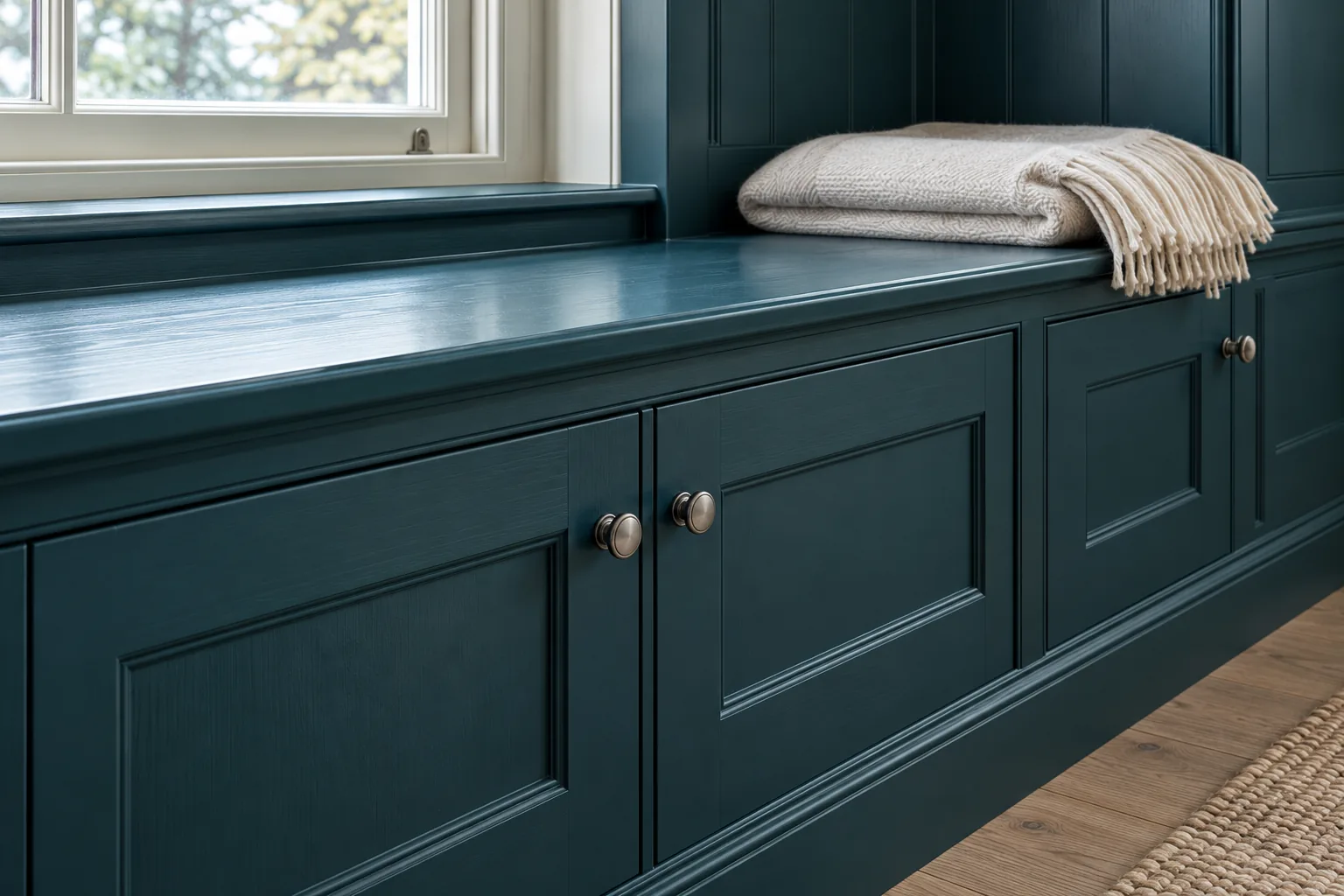
Name the individual elements
Separate door leaves from frames, window sashes from surrounds, and cupboard doors from interiors. Include shutters, rails and skirting where required. Make a list of handles, catches and hinges to retain, and agree whether removal and refitting are included rather than leaving those tasks implicit.
A sash window is a working assembly
Explain whether a window opens freely and note sticking, damaged timber or defects in the glazing putty. Painting and joinery repair need distinct scopes. Identify who will resolve defects before decoration and how opening surfaces, seals, glass and ironmongery will be protected during the work.
Judge sheen at the scale of the detail
Use a sample that shows the intended finish on a comparable profile, especially when a run of panelling catches light from the side. Compare it with adjoining walls and flooring. Record the product as well as the sheen name, since an informal instruction such as soft white does not identify a repeatable specification.
Respect historic surfaces
Camden’s guidance distinguishes matching maintenance from work using different materials or methods on a listed building. Provide any historic-fabric advice before deciding how to strip or prepare retained joinery. Keep the agreed method in the brief alongside the colour schedule so preparation is reviewed with the finish.
What preparation of painted joinery actually includes
Painted joinery in these houses may carry several generations of oil and water-borne coatings. The specification should say how far preparation goes. Washing, scraping loose edges, feathering the step between sound paint and bare timber, filling open joints and priming bare areas is one scope. Burning off or chemically stripping a whole architrave is another, and on a listed building a change of method can sit outside ordinary maintenance. Camden distinguishes like-for-like upkeep from a different material or method, so the brief should name the method before it is priced. Look hard at moving parts. A sash that sticks, a door that binds, or putty that has left the glass, is a repair question. Painting over it will not free the window. Say who will ease, splice or reputty, and whether that person is outside the decorating scope. Mouldings should be filled only where the profile can be kept. A flat smear across a bead is not a neutral repair. Record the primer the finish system requires, and do not substitute a wall emulsion because it is already on site for the ceiling.
Internal joinery and external joinery are different exposures
A sash window is one assembly with two climates. The room face may be a scuff-resistant interior finish judged against the wall colour. The outside face takes rain, sun and dirt, and it has to follow an exterior system with its own preparation and recoat rules. Write them as separate lines even when the colour looks the same in a photograph. Cills, drip grooves and the joint where timber meets stucco deserve a closer look than the middle of a rail. If the external putty, the staff bead or the sill nose is decayed, say so before the coating is chosen. Internal cupboard doors, window boards and shutter leaves stay in the dry, but hands, keys and cats rub them. Choose the sheen with that contact in mind and approve it on a piece of profile, not only on a flat card. The same caution applies to a front door. The street face, the rebate and the room face can be three specifications. Ironmongery that stays in place must be masked so the finish does not lock a hinge or a sash fastener.
Glass, fittings and the wall beside the frame
Joinery painting is messy at the edges. Agree what happens to glass, sash cords if they are exposed, letterboxes, knockers, finger plates and the wall or wallpaper that meets the architrave. Removing handles and hinges gives a cleaner arris and means someone has to refit them without damaging the fresh film. Leaving them on is faster and asks for careful masking. Either choice should be in the quotation. Cut the wall colour or the paper up to the frame before the final joinery coat if that is the agreed order, and protect the new paper while the architrave is finished. Where shutters fold into a box, paint the edges that show when the shutter is open, and say whether the hidden back is included. A schedule that says shutters, without inner faces, will disappoint. External ironwork, such as a railing or a balcony panel fixed beside a window, should not be assumed to take the timber system. Give it a line of its own. At the end, keep the product name and sheen against each element so a chipped nosing can be touched in without guessing which tin was used on the door.
Questions about Joinery & sash windows
What does joinery and sash-window painting include, and what is left out?
This scope is the woodwork you name: door leaves and frames, sashes and surrounds, shutters, panelling, skirting, window boards and cupboard doors. A leaf and a frame are not the same job, so give each its own line. Wall and ceiling paint, and any wallpaper, stay with the interior services. Freeing a binding sash, splicing decayed timber or renewing failed putty is a repair, not painting, and should be named separately. Ironmongery is included only if you agree to remove and refit it, or to mask it in place.
How should I separate the inside and outside of a window or front door?
A sash is one assembly with two exposures. The room face is judged against the wall colour and is usually an interior finish. The street face takes weather and needs an exterior system, with its own preparation and recoat rules, even when the two colours look alike in a photograph. Cills, the joint with stucco and any decayed putty need a closer note than the middle of a rail. On a Primrose Hill elevation, do not hide the outside face inside an internal room list.
What should I send for a joinery quotation?
List every element and say whether handles, hinges, catches and letterboxes stay on or come off. Mention sticking sashes, damaged timber and putty that has left the glass, with photographs of those faults rather than only of the whole window. If shutters fold into a box, say whether the hidden faces are included. Record the product and sheen you have in mind, or say that the choice is still open. For a flat or a shared house, add any rule about entrance doors and communal windows.
What is sensible practice for preparation, drying and a house that stays lived in?
Painted joinery in these houses may carry older coatings. Washing, easing loose edges, filling open joints and priming bare wood is a different proposal from stripping an architrave back to bare timber. On a listed building, a change of method can sit outside ordinary matching maintenance, so write the method down before it is treated as agreed. The product sheet sets the gap between coats, and that gap is not a finish date. Agree which doors must still close each evening.
Related services
Area guides for this work
Your Primrose Hill project
A room, a façade,
a new direction.
Tell us what you have in mind, where the property is and which surfaces need attention.
Let’s discuss the work
Include the address, current condition and any access arrangements.