The decorating notebook
Painting, colour & consent
An exterior repaint, a change of colour and painting bare brick are different proposals. Describe the work precisely before checking which permissions apply.
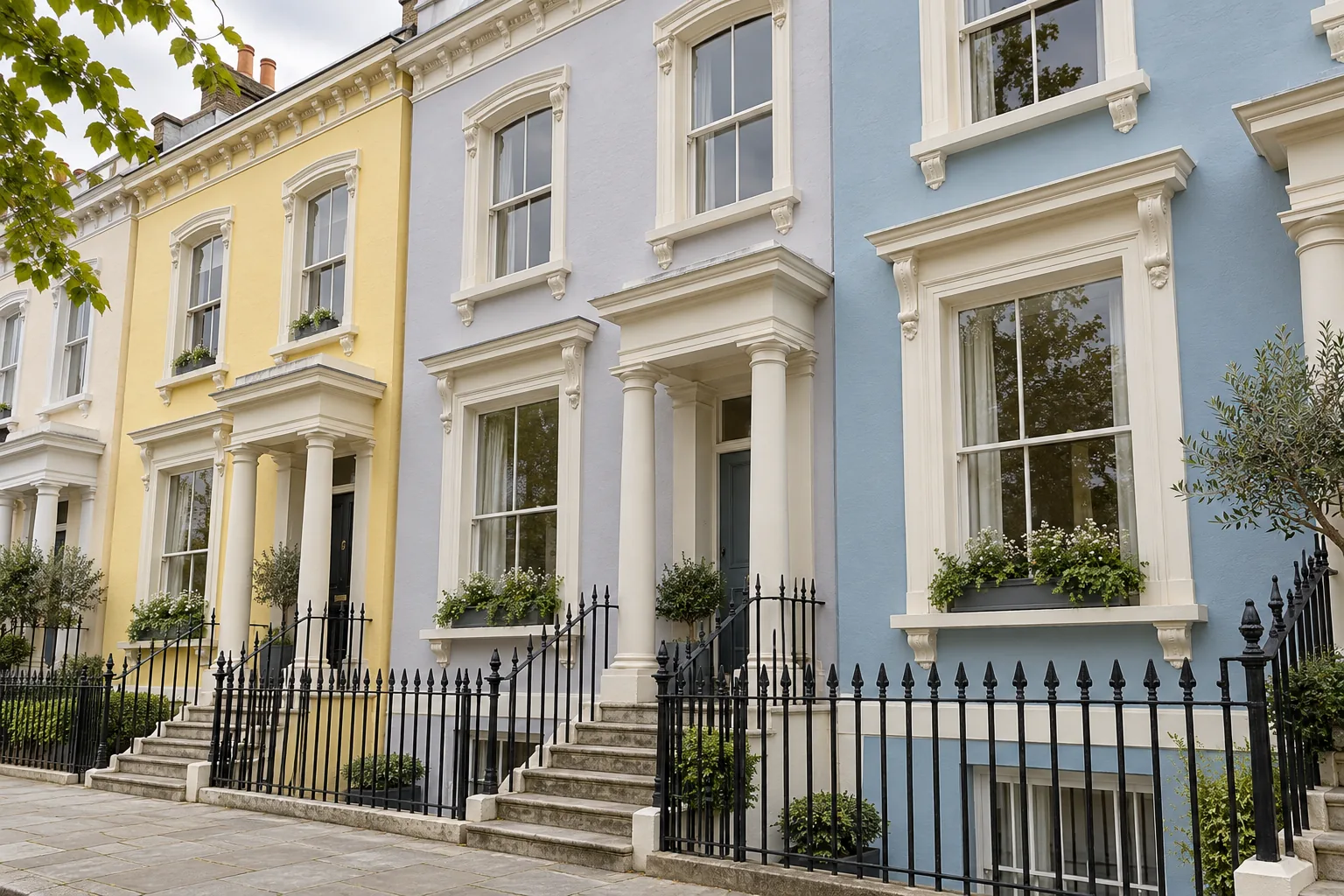
Three separate checks
Establish the conservation area boundary, whether the building is listed and whether an Article 4 direction affects it. Camden still links its Primrose Hill statement, adopted in December 2000, as guidance for the area. Use its architectural context alongside current council advice for the proposed work.
Sources: Camden: Primrose Hill conservation guidance; Camden: heritage Article 4 directions; Camden: listed buildings and consent
What the Primrose Hill direction actually says
The published Article 4 schedule includes painting exterior brickwork visible from the highway. Its application must be checked against Camden’s affected-property list. This is not a general statement that every existing stucco colour needs planning permission, nor permission to coat bare brick elsewhere. Ask Camden about the specific address and treatment.
Sources: Camden: Primrose Hill Article 4 schedule; Camden: properties affected by the Primrose Hill direction
A listed façade and a new colour
Listed-building consent and planning permission are distinct. Historic England advises that exterior decoration changing a listed building’s character may need consent, including painting previously unpainted walls or a pronounced colour change. Establish the position before ordering paint or starting preparation, and retain the written advice and any approved sample.
Sources: Camden: listed buildings and consent; Historic England: redecorating a historic home
Describe preparation, not just the final shade
Give the existing and proposed products where known, photographs, a colour sample and the surfaces affected. Explain any stripping, abrasive preparation, repair or replacement. Camden distinguishes matching maintenance from changes to materials and methods, so a short label such as repainting may omit the part of the proposal that requires review.
A practical document set
Keep the address and listing reference, the relevant direction, an annotated elevation, product information and any decision documents together. Identify conditions that must be discharged or samples that need approval. The decorating quotation should follow that agreed scope, with unresolved repairs and access matters shown separately.
A practical order for the permission questions
Take the address and answer four questions in order, using Camden’s current pages rather than a neighbour’s experience. First, which conservation area is the building actually in. Primrose Hill’s statement was adopted in December 2000 and Camden still links it, but Elsworthy and the canal conservation area are different documents, and Belsize has its own. Second, is the building listed. Camden explains that work affecting special interest, inside or out, needs listed-building consent, and that this consent is not the same thing as planning permission. Third, does an Article 4 direction catch the address. The Primrose Hill direction was adopted on 3 March 1983. Its published schedule includes painting exterior brickwork that can be seen from the highway, and it applies to the affected-property list, not to every stucco repaint in the area. Belsize’s fact sheet, amended in June 2026, draws a different line, between changing a traditional front treatment, including painting unpainted brick, and repainting an existing painted or stucco finish. Fourth, what exactly will be done. Refreshing a sound coating, painting bare brick, stripping to a new system, and changing a listed colour are four proposals. Write the one you mean.
Sources: Camden: Primrose Hill conservation guidance; Camden: heritage Article 4 directions; Camden: listed buildings and consent; Camden: Primrose Hill Article 4 schedule; Camden: properties affected by the Primrose Hill direction; Camden: Belsize Article 4 fact sheet, June 2026
Papers to have ready before paint is ordered
Build a small pack and keep it with the enquiry. Include the full address, a location plan or a clear street photograph, and close photographs of every material the work would touch. Add the list-entry heading if you have found one, without assuming the next house shares it. Historic England’s entries for 1–11 Chalcot Square and for 24–46 even Chalcot Crescent, for example, are separate Grade II records and do not speak for an address outside them. Note the existing product if you know it, the proposed product, and a sample large enough to judge on the wall. Describe preparation in verbs: wash, scrape loose material, fill, strip, reputty, replace. Camden’s maintenance advice is that like-for-like upkeep is not the same as a change of material or method, so the verbs matter. If you have already been told to submit a sample or to discharge a condition, put that letter in the pack. The decorating quotation should follow the pack. It should not invent a colour in the gap, and it should mark any elevation that is waiting for an answer. Ordering tins before that answer is a risk you would be taking on the product.
Sources: Historic England: 1–11 Chalcot Square; Historic England: 24–46 Chalcot Crescent; Camden: maintenance and work to listed buildings
Where maintenance ends and a change begins
The difficult line is not the word painting. It is whether the work matches what is already there. Washing down a sound stucco coating and applying the same type of finish, in a colour already on that building, is the sort of upkeep Camden’s maintenance page distinguishes from a change. Moving from one system to another, removing paint to leave brick exposed, or coating brick that has not been coated, is a change to describe in full. Historic England adds that exterior redecoration which alters the character of a listed building may need consent, including a first-time paint treatment and a pronounced colour change, and that historic stucco needs substrate-specific advice. Bring that advice into the specification before a generic masonry paint is treated as harmless. Interior work on a listed house can cross the same line if it affects special interest. A new colour on ordinary plaster may be straightforward, and sanding historic joinery back to bare wood may not. Ask with the method attached. Keep the written reply, the approved sample and the final product names together. This guide cannot clear the address. It can stop the brief using a single word, repaint, for several different proposals.
Sources: Camden: maintenance and work to listed buildings; Historic England: redecorating a historic home; Camden: listed buildings and consent
Your Primrose Hill project
A room, a façade,
a new direction.
Tell us what you have in mind, where the property is and which surfaces need attention.
Let’s discuss the work
Include the address, current condition and any access arrangements.