Primrose Hill Painters & Decorators
Interior decorating
Painted rooms and wallcoverings for Primrose Hill homes, and how to tell which scope a wall belongs to.
Discuss your project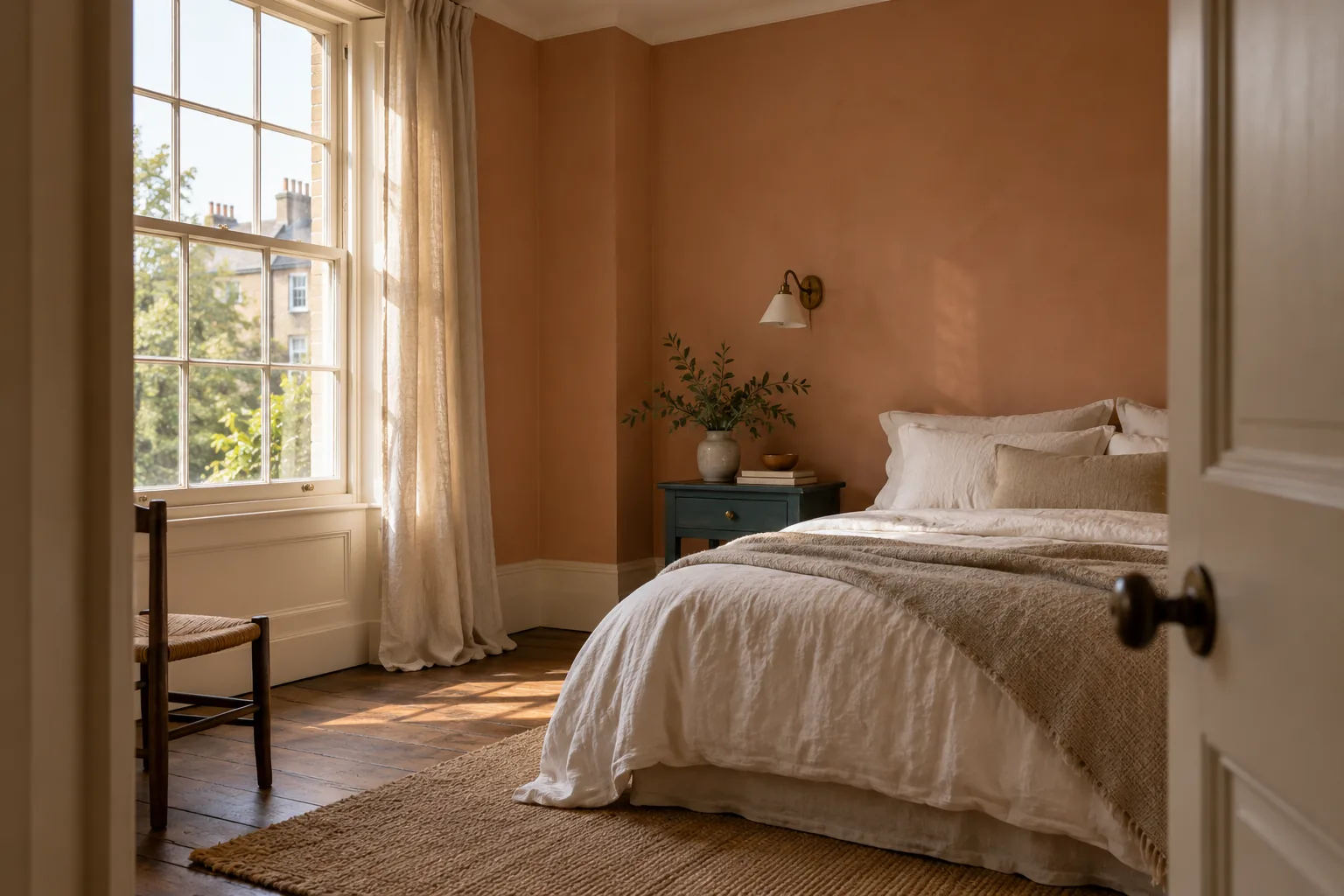
Services in this group
Interior painting
In a Primrose Hill home, a room should be read from the doorway to the window, including the surfaces that are easy to overlook. Begin with what you want to retain and what needs to change.
Read about interior painting 02Wallpaper & wallcoverings
A wallcovering changes the scale and texture of a Primrose Hill room. Its layout belongs in the same note as the plaster beneath it and the joinery that frames the wall.
Read about wallpaper & wallcoveringsOpen interior painting when the finish is a coating
Choose interior painting when the walls and ceilings are to be coated and the preparation belongs to those surfaces. A Primrose Hill drawing room, a bedroom in a converted house and a flat set back from Gloucester Avenue can all sit on that page, and they are still different briefs, because the plaster, the light and the way the household uses the room are not interchangeable. Write the rooms down from the front door. A cornice or a ceiling rose joins the painted line only when you name it. The architrave, the sash, the shutter and a cupboard door stay with joinery, even when you see them in the same glance as the wall. If one wall is to carry a patterned or textured covering, that wall is not a paint colour under another name. It belongs with wallpaper. Keeping the lines apart is what lets a quotation say which surface is washed and filled, and which surface may be stripped and hung. A stain, a damp question or a plumber’s repair is not either service until someone has said the surface is ready to receive a finish.
Open wallpaper hanging when the wall carries a named material
Choose wallpaper when you already have, or are about to choose, a specific covering: a printed paper, a textured hanging or another roll whose layout matters. The decision is not “a more interesting wall”. It is a product, a repeat, a starting place and a wall that can accept it. Interior painting can still coat the ceiling, the returns and any wall that stays plain. The paper page is where you say which walls receive the roll, who orders it, and what should happen if the plaster under an old covering is not what you hoped. Lining, sealing and making good after stripping are preparation, and they should be written as items that may change once the existing finish is off. Do not fold them into a single sentence that says the room will be decorated. In a Primrose Hill flat reached by a shared stair, also say how a pasting table and the rolls reach the room, and whether a managing agent has rules about the communal parts. Those rules are not a description of the paper.
Where the two meet, and where other groups begin
Most occupied rooms need a sequence, not a blend. Ceilings are often coated before paper goes up, so that ceiling colour is not cut against a finished length. Joinery may be undercoated first and finished after the paper, or completed first and then protected. Either order can be sound. What fails is an unspoken mix, because a new length and a wet architrave spoil each other. Write the order in the brief. Joinery itself, including sashes and shutters, is in the exteriors and joinery group even when the woodwork is inside. Colour planning, in the planning and finishes group, is where a palette is judged and written down before products are opened. Period-home decoration is where you mark details that must not be stripped or filled. You can use those pages without leaving this group: they answer a different question. This group answers what is happening to the broad surfaces of the room. If a feature wall is papered and the other walls are painted, you have two lines in one room, and both pages apply.
The shell around the room, and what to send for each
Camden’s Primrose Hill statement, adopted in December 2000 and still the document the council links for the area, is about streets and exteriors rather than your bedroom colour. It is still useful when you choose between these two services, because it shows the shells people are decorating. Southern parts of the area are described as Italianate villas, with decorative stucco and timber sash windows. Chalcot Square is noted for muted pastel façades. Gloucester Avenue is discussed through residential terraces and former industrial buildings, and the canal conservation area is placed beyond the Primrose Hill boundary. Fitzroy Road and Princess Road sit with terraces, courtyard infill and former industrial buildings. Primrose Hill Studios, off Fitzroy Road, are Grade II studio houses of 1877–82, stock brick with red-brick trim around a courtyard. None of that picks a paint or a paper. It tells you whether the brief is a villa room, a flat in a former works, or a studio off a courtyard, so photographs and the room list match the building. For painting, send the address, the room list, notes of stains and new plaster, and pictures of corners and reveals. For a covering, send the manufacturer’s reference, the repeat if you have it, and the wall the pattern should start from. Pictures can travel by email or WhatsApp after the form has carried the written note. Sending that note asks for a discussion of scope and availability. It does not keep a start date, and it is not a permission the building may require.
Sources: Camden: Primrose Hill Conservation Area statement; Camden: Primrose Hill conservation guidance; Historic England: Primrose Hill Studios
Your Primrose Hill project
A room, a façade,
a new direction.
Tell us what you have in mind, where the property is and which surfaces need attention.
Let’s discuss the work
Include the address, current condition and any access arrangements.