Primrose Hill Painters & Decorators
A record of colour and material
The paint reference is part of a wider specification. Record what it is going onto, how it will be prepared and the finish you have approved.
Discuss your project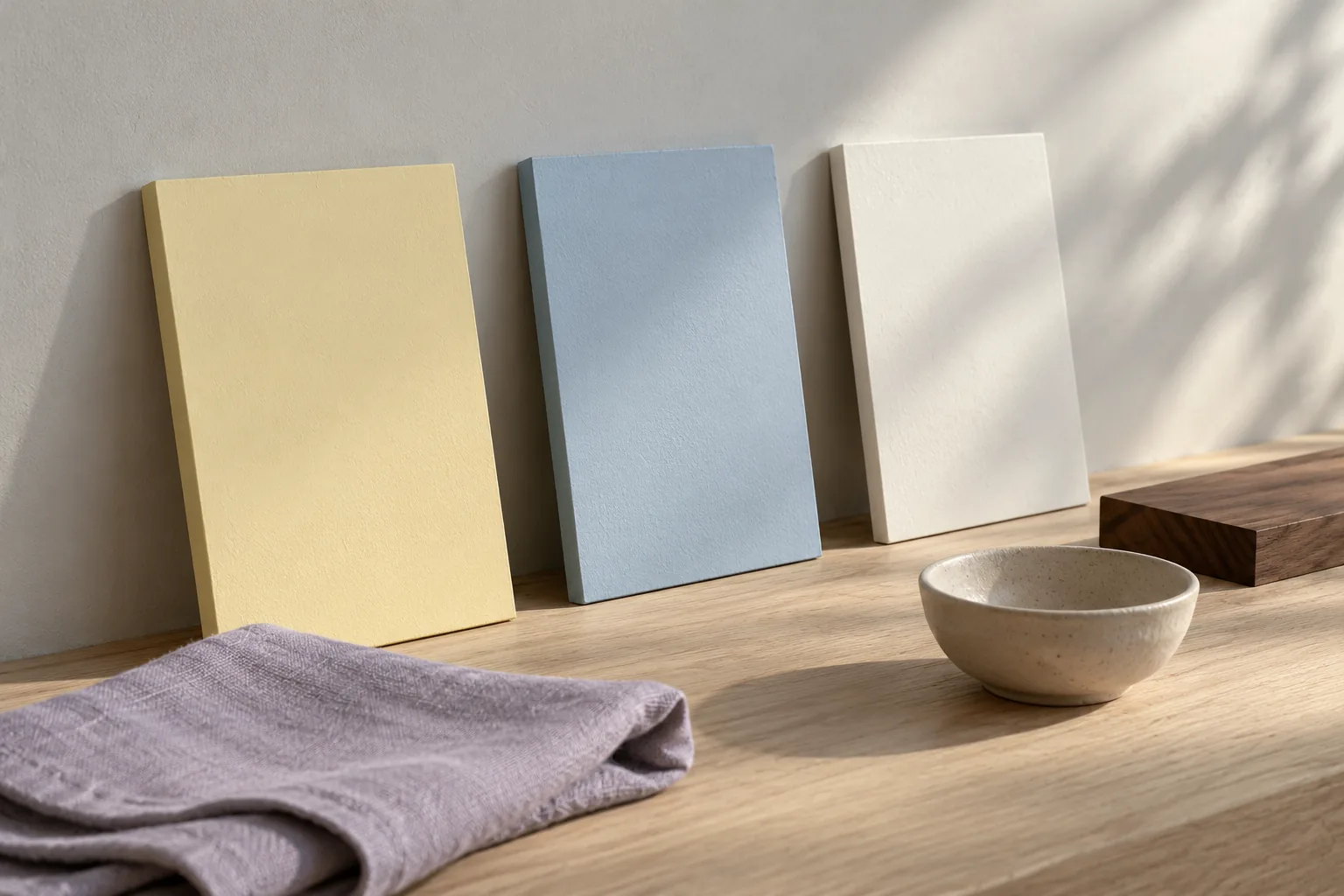
One surface, one complete reference
For each element, note the manufacturer, product, colour code and sheen. Record whether it is internal or external, new or previously coated. If an existing finish is to stay, identify its boundary and include a photograph showing where the new work will meet it.
A sample should answer a question
Use physical samples to compare undertones, sheen and the relationship with fixed materials. View them at different points in the room, including the normal evening lighting. Keep the approved sample labelled so it can be matched to the written schedule.
Let the substrate guide the product
Review the product’s technical instructions for preparation, compatibility and application. Where the surface or earlier coating is uncertain, investigate before choosing the system. For historic fabric, bring any relevant advice or permission conditions into that choice instead of using a generic paint specification.
Retain the useful details
Keep the final schedule and the manufacturer’s care information. Agree how remaining materials will be labelled and stored. A later repair is easier to discuss with the exact product and surface record than with a photograph or colour name alone.
Let the substrate and the exposure choose the system
A colour name is not a specification. The coating has to suit what it is applied to, and whether that surface is inside a room or on the weather. Follow the manufacturer’s technical instructions for preparation, priming, compatibility with the existing coating, and the conditions in which the product can be applied. Where the earlier coating is unknown, find out what you can before a new system goes over it. Historic England’s redecoration advice is that historic stucco needs guidance specific to the substrate, and that earlier finishes may themselves be of interest. That is a reason to pause, not a reason to pick a favourite interior emulsion and take it outside. Camden’s home-improvements guidance favours keeping original external finishes and generally advises against painting exposed masonry. If a wall is already painted, the question is the condition and compatibility of that coating. If it is bare, coating it is a different proposal and may raise a planning or consent question at the address. Inside, new plaster, a stained ceiling and a previously painted lining are not the same preparation. Write the system against the element: ceiling, wall, joinery, exterior stucco or railing.
Sources: Historic England: redecorating a historic home; Camden: Home Improvements guidance, external alterations
Sheen, cleaning and the light on a moulding
Sheen changes both the look of a colour and how a surface will be washed. A flatter finish can soften a broad wall and show less of a slight unevenness. A more resistant sheen can be reserved for doors, window boards and other joinery that hands and cloths touch. Judge that on a sample large enough to read, next to the floor and the fabrics that will remain, in daylight and in the evening light you use. A sheen that looks quiet on a card can look sharp on a long architrave lit from the side. Ceilings are easy to ignore in this comparison. If the ceiling and the cornice are specified in different sheens, look at the junction from the doorway, not only from directly underneath. External joinery and external masonry should not inherit an interior sheen choice. Rain, sun and the way dirt gathers on a cill are practical reasons to read the exterior product data separately. Record the sheen in words the tin will recognise, alongside the manufacturer and the colour code. An instruction such as soft white, or the same as the landing, will not identify the finish when a later repair is needed.
Labels, leftovers and the note a later repair needs
When the schedule is agreed, keep it. For each surface, file the manufacturer, the product, the colour reference, the sheen and, when you have them, the batch code and the date it was applied. Photograph the approved sample next to a label. If one wall was left in an earlier finish on purpose, say where the new work stops. Leftover material is useful only if the tin is labelled and stored as the manufacturer recommends. A bedroom tin that has migrated to a cupboard without a name becomes a guess. Care instructions belong with that record: what can be washed, what should only be dusted, and how long the product asked to be left before cleaning. If a managing agent or a conservation decision required a particular finish, keep that paper with the schedule so a future refresh does not start from a colour name alone. A later enquiry is simpler when you can send the page from the schedule and a photograph of the damage, and say whether you want the same system again or a change that needs its own approval.
Your Primrose Hill project
A room, a façade,
a new direction.
Tell us what you have in mind, where the property is and which surfaces need attention.
Let’s discuss the work
Include the address, current condition and any access arrangements.