Primrose Hill Painters & Decorators
Exteriors & painted stucco
On a Primrose Hill building, an exterior scheme starts from the elevation as it stands: the coatings already there, the materials left exposed, the repairs and the way each part of the front is reached.
Discuss your project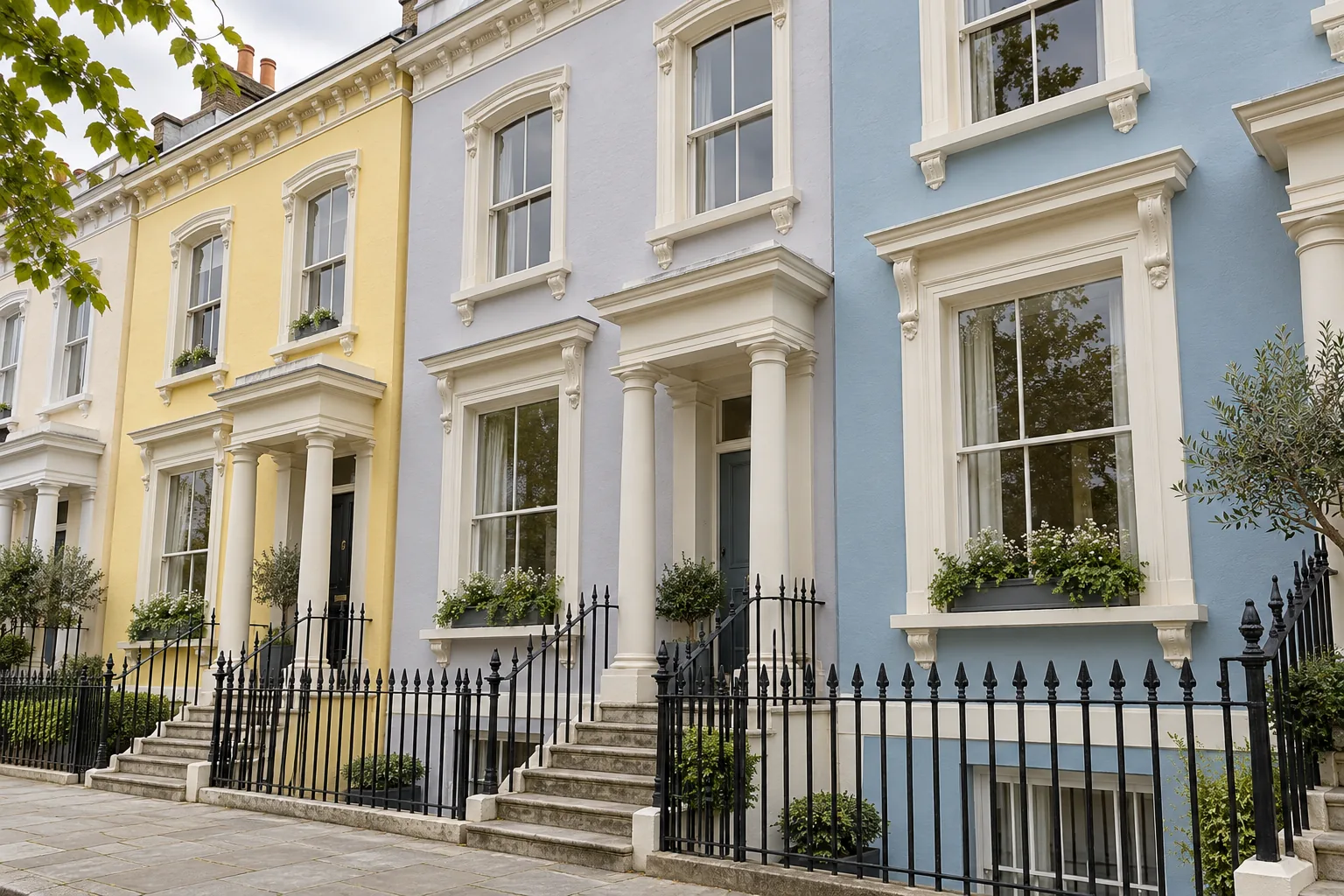
Retain the distinction between materials
Camden’s Home Improvements guidance generally favours leaving exposed masonry unpainted and retaining original exterior finishes. Photograph bare brick, painted stucco and joinery separately. Where an existing coating needs attention, establish its condition and compatibility before deciding on removal, repair or a new system.
Sources: Camden: Home Improvements guidance, external alterations
Check the proposed change
Primrose Hill’s published Article 4 schedule includes painting exterior brickwork visible from the highway at affected properties. A listed building may also require consent for redecoration that changes its character. Check the address, proposed colour and preparation method with Camden before treating a neighbouring painted façade as a precedent.
Sources: Camden: Primrose Hill Article 4 schedule; Camden: properties affected by the Primrose Hill direction; Historic England: redecorating a historic home
Treat repair and decoration as separate decisions
Identify cracks, water staining, loose material and failed joints in the enquiry. Establish which repairs form part of the quotation and which require further assessment. Choose the coating after the substrate and repair specification are understood, with its application conditions and drying instructions included in the programme.
Reach every surface in the agreed scope
Define the upper-storey access, lower-ground areas, side returns and railings that are included. Agree protection for glazing, paths and adjacent property. Where a separate access permission or building agreement is needed, resolve it before equipment or material deliveries are booked.
Weather, dew and the gap the product asks for
An exterior coating depends on the calendar as well as on the preparation. Read the technical sheet for the system you intend to use and write down the temperature range, the recoat interval and any warning about rain, frost or direct sun. Those intervals are not a promise that a whole elevation will be finished in a set number of days. They are the gaps the specification has to leave empty. Because the work is outside, dew on a cold cill, a shower on fresh stucco and strong sun on a dark colour are practical risks to plan for. Do not assume a dry week. Watch the forecast against the product limits and be ready to stop. Masking and scraping can sometimes continue when coating cannot. Say which tasks are weather-dependent and which are not, so a lost coating day does not automatically cancel every arrangement. Lower-ground areas and covered porches dry differently from a top-floor parapet. If the brief includes both, give them separate notes. A quotation that ignores the sheet’s conditions is describing a colour, not a system that can be applied on this elevation.
An elevation read as separate materials
Camden’s home-improvements guidance asks that original external finishes be kept, and it generally advises against painting exposed masonry. On a Primrose Hill front that guidance meets whatever is already there: painted stucco, bare stock brick, timber sashes, iron railings, a stucco cornice. Photograph each one and give it a line in the scope. The stucco line should say whether the proposal is to clean and recoat a sound existing film, to cut out hollow or cracked areas for repair, or to remove a coating. Those are different jobs. Historic England notes that historic stucco needs advice matched to the substrate, so a failed patch is a reason to identify the build-up before another product goes over it. The brick line should say bare or already painted. Painting bare brick that can be seen from the highway is specifically in the published Primrose Hill Article 4 schedule for affected properties, and it is not the same question as refreshing a stucco colour. Joinery and railings need their own preparation and their own coating. A single colour name spread across all four lines will hide the decisions that matter.
Sources: Camden: Home Improvements guidance, external alterations; Historic England: redecorating a historic home; Camden: Primrose Hill Article 4 schedule
Consent, covenants and the neighbour’s finish
Outside work collects permissions that interior work may never meet. Check whether the address is on the Primrose Hill affected-property list before anyone treats the Article 4 schedule as if it applied to every house. The schedule’s painting control is about exterior brickwork visible from the highway, not a general ban on maintaining painted stucco. If the building is listed, a pronounced colour change or a first coat on an unpainted wall can need listed-building consent, which is distinct from planning permission. Camden also separates like-for-like maintenance from a change of material or method, so stripping back to a different system is a question to put in writing, not a detail to hide inside the word repaint. Home-improvements guidance points to traditional treatment, neighbouring schemes, conservation guidance and freeholder covenants together. A covenant or a managing agent’s rule can narrow the colour even when the council is content. Photograph the adjoining houses so a sample can be discussed against them, and keep any written answer with the specification. Access for upper floors, side returns and lightwells should be settled before dates are fixed. None of that is granted by the fact that a nearby façade is already painted.
Sources: Camden: Primrose Hill Article 4 schedule; Camden: properties affected by the Primrose Hill direction; Historic England: redecorating a historic home; Camden: listed buildings and consent; Camden: maintenance and work to listed buildings; Camden: Home Improvements guidance, external alterations
Questions about Exteriors & painted stucco
What does exterior painting cover, and where does joinery take over?
Exterior painting is the coating on the elevation you name: painted stucco or render, a failed existing film, or masonry that is already painted and is proposed for recoating. Bare brick that should stay bare is a different decision from recoating stucco. Timber sashes, doors and shutters are joinery, with their own preparation, even in the same façade. Railings and other ironwork need their own line, and they are not assumed to take the masonry system.
Which consent questions belong with an exterior brief in Primrose Hill?
The published Primrose Hill Article 4 schedule includes painting exterior brickwork visible from the highway, at properties on the affected list. That is an address check, not a rule that every existing stucco colour needs planning permission. A listed building can raise a further question when redecoration would change its character, including a pronounced colour change or a first coat on an unpainted wall. Listed-building consent is separate from planning permission. Council guidance generally favours keeping original external finishes and leaving exposed masonry unpainted.
What should I send for an exterior quotation?
Send the address, the present finish and the change you have in mind. Photograph stucco, bare brick, timber and iron separately, including upper floors, the lower ground and any side return in the scope. Note cracks, staining and loose material, and say which of those you already know need another trade. If scaffold, a pavement arrangement or a managing agent’s consent is likely, say what has been asked for and what is still open. Use the form for the written enquiry, and send any extra pictures afterwards.
How do weather and access affect recoating, as a matter of practice?
Read the sheet for the system you intend to use and note its temperature range, the gap between coats and any warning about rain, frost or strong sun. Those gaps belong in the specification. They are not a promised number of days for a whole Primrose Hill elevation, because dew, a shower and a shaded lightwell do not behave like a warm, dry wall. Upper storeys, side returns and lower-ground areas need their own access note before equipment is booked.
Related services
Area guides for this work
Your Primrose Hill project
A room, a façade,
a new direction.
Tell us what you have in mind, where the property is and which surfaces need attention.
Let’s discuss the work
Include the address, current condition and any access arrangements.